

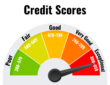





A credit score is a three-digit number—typically ranging from 300 to 850—that represents your creditworthiness based on your borrowing and repayment history. Lenders use it to decide whether to approve you for loans, credit cards, and mortgages, and what interest rate to charge you. If you’ve been wondering “what is a credit score,” the higher your score, the less risk you represent to lenders, which often translates to significantly lower monthly payments on your debt.
The most widely used scoring model is the FICO Score, created by Fair Isaac Corporation. VantageScore is the other major model. Both use similar factors and produce scores in the same 300-850 range.
Credit Score Ranges
|
Score Range |
Rating |
What It Means |
|---|---|---|
|
800-850 |
Exceptional |
Best rates available; easy approval |
|
740-799 |
Very Good |
Near-best rates; strong approval odds |
|
670-739 |
Good |
Average rates; approved for most products |
|
580-669 |
Fair |
Higher rates; limited product access |
|
300-579 |
Poor |
Difficult to get credit; very high rates |
What Goes Into Your Credit Score?
Your FICO score is calculated from five factors, each weighted differently:
|
Factor |
Weight |
What It Measures |
|---|---|---|
|
Payment history |
35% |
Do you pay on time? |
|
Amounts owed (utilization) |
30% |
How much of your available credit are you using? |
|
Length of credit history |
15% |
How long have you had credit accounts? |
|
Credit mix |
10% |
Do you have different types of credit? |
|
New credit |
10% |
Have you recently applied for new credit? |
Payment history and utilization together make up 65% of your score – focus on these two first.
The Credit Utilization Rule
Utilization is your credit card balance divided by your total credit limit. If you have a $10,000 limit and carry a $3,000 balance, your utilization is 30%.
|
Utilization Rate |
Impact on Score |
|---|---|
|
Under 10% |
Excellent impact |
|
10-30% |
Good impact |
|
30-50% |
Moderate negative impact |
|
Over 50% |
Significant negative impact |
Keeping utilization below 30% is widely recommended. Below 10% is even better for maximizing your score.
What Hurts Your Credit Score?

- Missing payments – a 30-day late payment can drop your score 50-100 points
- High credit card balances – high utilization drags your score down month after month
- Closing old accounts – reduces your credit limit and shortens your history
- Applying for too much new credit – multiple hard inquiries in a short period signal risk
- Collections and charge-offs – unpaid debt sent to collections is severely damaging
- Bankruptcy – stays on your report 7-10 years and dramatically lowers your score
How to Improve Your Credit Score
|
Action |
Timeline |
Impact |
|---|---|---|
|
Pay all bills on time |
Ongoing |
High – 35% of score |
|
Pay down credit card balances |
1-2 months |
High – especially if utilization is high |
|
Don’t close old credit cards |
Immediate |
Medium – preserves history and limit |
|
Dispute errors on credit report |
30-45 days |
High if errors exist |
|
Become an authorized user |
1-2 months |
Medium |
|
Request a credit limit increase |
Immediate |
Medium – lowers utilization ratio |
Where to Check Your Credit Score
- AnnualCreditReport.com – free full credit reports from all three bureaus (Equifax, Experian, TransUnion)
- Credit Karma – free VantageScore from TransUnion and Equifax
- Your bank or credit card – many now offer free FICO score access
The Bottom Line
Your credit score is one of the most financially consequential numbers in your life. A difference of 100 points on a 30-year mortgage can cost or save you tens of thousands of dollars in interest. The formula is simple: pay on time, keep balances low, and don’t open more credit than you need. Build that habit and the score takes care of itself.

How to Transform Your Business Growth with Vastu for Factory Solutions?

In today's competitive industrial landscape, business owners are constantly searching for ways to improve productivity, profitability, and workplace harmony. While...

Investopedia Stock Simulator: The Best Free Tool for Learning to Invest


The Investopedia Stock Simulator is a free virtual trading platform that gives you $100,000 in "paper money" to trade real...

How to Calculate Debt to Equity Ratio: Step-by-Step Guide
The how to calculate debt to equity ratio process takes less than a minute once you have a company's balance...

Jensen Huang Net Worth— How the NVIDIA Founder Built One of History’s Greatest Fortunes
As of March 19, 2026, jensen huang net worth stands at approximately $182 billion. The Nvidia CEO has seen his...