






Pre-Monsoon Construction Safety Checklist: Why Fall Protection Nets Are Non-Negotiable

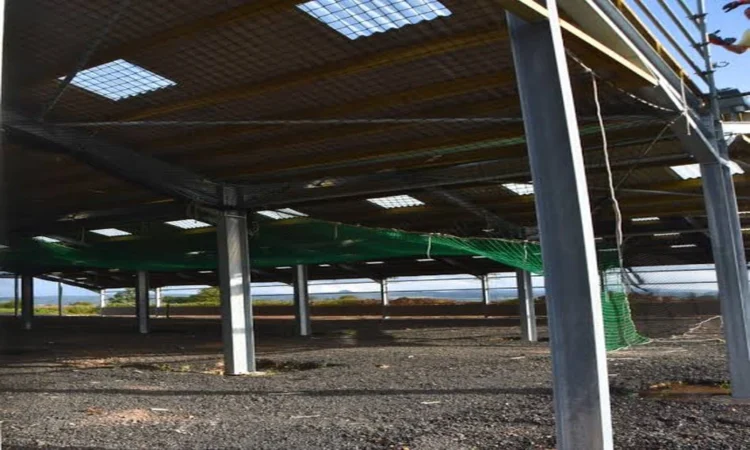
Every year, as monsoon approaches, construction sites across India face a predictable window of elevated risk. Wet surfaces, reduced visibility, high winds, and saturated scaffolding compound the dangers that workers face at height. Safety nets are one of the few passive protection measures that remain effective regardless of how quickly conditions change on site. They don’t require a worker to take action before they work. They’re already there.
Getting them inspected, replaced where necessary, and correctly installed before the rains arrive is among the most important things a site safety team can do. This checklist breaks down what that process should involve.
Why Monsoon Conditions Change the Risk Equation
Falls are a problem in every construction site. During the rains, that risk compounds significantly.
Scaffolding boards become slippery within minutes of rain. Wind loading on perimeter nets and temporary structures increases sharply. Workers wearing wet PPE have reduced grip and mobility. And critically, emergency response on a rain-affected site is slower, which means the margin for error is narrower.
Fall protection nets work as passive systems precisely because they don’t rely on a worker’s judgement or reaction time. A properly installed net catches a falling worker regardless of how the fall occurs, which makes them especially indispensable in monsoon conditions.
Pre-Monsoon Inspection: What to Check
Before the season begins, every net on site should be physically inspected rather than visually scanned from a distance.
- Mesh and Cord Integrity: Look for broken cords, fraying, UV degradation, and knot slippage. A cord weakened through weathering may appear intact until it’s stressed. Construction safety nets exposed to a full summer of UV radiation are particularly susceptible to hidden fibre damage.
- Anchor Points and Border Ropes: The perimeter rope, or border cord, is the primary load-bearing element under impact. Check every fixing point where the net connects to the structure. Loose fixings, corroded brackets, or border ropes that have been spliced rather than replaced are grounds for immediate remediation.
- Coverage Gaps: Check for unprotected openings between nets or between nets and structural elements. Gaps larger than the mesh size at the perimeter are potential fall paths and must be closed before work at height resumes.
Types of Nets and Where Each Goes
Personnel arrest nets are installed horizontally below working levels to catch falling workers. These are the most structurally demanding nets on site, requiring heavy-gauge braided or knotted construction and border ropes capable of transferring the arrest load to anchor points.
Debris nets are typically installed as a secondary layer, catching tools and smaller fragments that pass through the outer mesh. On high-rise sites near public areas, debris containment is as much a liability concern as a safety one.
Side protection nets are installed vertically around building perimeters to prevent falls from open edges and stop materials from leaving the site footprint. During monsoon conditions, when wind can carry light materials considerable distances, perimeter netting takes on added significance.
An experienced industrial safety net manufacturer will supply nets specified for each application. The cord weight, mesh size, and border construction differ meaningfully between personnel arrest and debris containment uses.
Installation Checks Before the First Rain
A net that passes inspection but is incorrectly reinstalled provides no meaningful protection. Installation quality is as important as product quality.
Key checks include verifying that anchor points are fixed into structural members, not cladding or infill panels; that the net has correct clearance below it to allow sag under load without the worker contacting the structure below; and that adjoining nets overlap sufficiently to eliminate gaps at the seams.
On multi-storey sites, nets should be installed no more than two storeys below the highest working level and repositioned upwards as the build progresses. This procedural requirement often slips during busy phases, particularly when monsoon delays create pressure to accelerate work.
The Checklist Summary
Before the monsoon arrives, a site safety team should confirm the following: all protective nets have been physically inspected cord by cord;
The cost of replacing a compromised net before the rains is a fraction of what a serious incident costs, in financial terms and in human ones.
These are passive systems. They work when everything else fails. Getting them right before the season begins is the one preparation that cannot be deferred.

Complete Guide to Identifying Fake ICA Approval Letters and Consultants

IntroductionApplying for Singapore Permanent Residency is certainly an important achievement for foreigners who have built their careers and lives in...
PTFE Encapsulated O Rings, Low Temperature O Rings and Cartridge Mechanical Seals: A Guide
Sealing technology in chemical processing, pharmaceutical manufacturing, food and beverage production, and precision engineering applications has moved far beyond the...

Reading Index Structure: Advanced Techniques for Trading Major Equity Benchmarks


Major equity indices can appear straightforward on the surface. A benchmark rises when its component stocks collectively strengthen and falls...

What Nonprofit Boards Should Look For In An Executive Director
A nonprofit organization's performance and direction are largely determined by its leadership. The executive director is usually in charge of...