






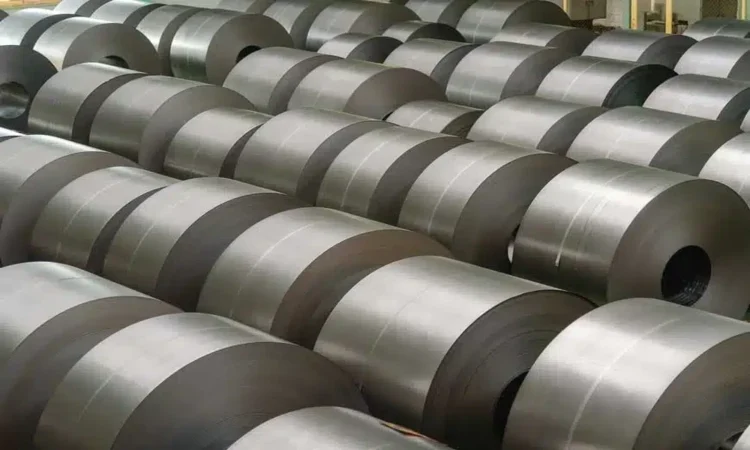
Heavy equipment isn’t built to last a season or two. Excavators, cranes, mining machinery, and dam gates are not meant to be replaced every few years. It’s built to survive constant loading, impact, abrasion, and sometimes extreme environmental conditions for a long stretch of time. None of that is really possible without the right base material, and that’s precisely why manufacturers across the industry reach for heavy-duty steel plate instead of settling for something generic off the shelf.
This piece looks at what actually makes high-strength plates the go-to choice in heavy equipment manufacturing, and what buyers and fabricators should be paying attention to before they commit to a supplier.
The Problem With Using Ordinary Steel for Heavy Equipment
Standard grade steel works fine for a lot of general fabrication work. Fences, light frames, basic brackets, no complaints there. But heavy equipment applications push materials well beyond typical structural demands. Equipment bodies, buckets, dump bodies, penstocks, all of these face repeated impact, abrasive wear, and sustained mechanical stress that ordinary material just isn’t designed to absorb.
Using regular steel plates in these situations usually leads to a fairly predictable set of problems:
- Premature fatigue cracking under repeated loading
- Faster wear in high-abrasion zones like buckets and chutes
- Reduced the overall service life of the equipment
- Increased maintenance costs and more downtime over time
None of that is acceptable when equipment is expected to run for years under demanding, often unforgiving, conditions.
What Actually Makes High-Strength Plates Different
High-strength heavy plates aren’t just thicker versions of regular steel. They’re engineered specifically to resist wear, absorb impact without deforming, and maintain structural integrity under sustained loads. The metallurgy, the rolling process, and the heat treatment all get tuned toward this outcome, rather than toward general-purpose flexibility.
A few properties tend to separate a genuine high-strength plate from an ordinary one:
| Property | Why It Matters for Heavy Equipment |
| High yield strength | Resists permanent deformation under load |
| Good impact toughness | Absorbs sudden shocks without cracking |
| Abrasion resistance | Extends life in wear-heavy zones |
| Reliable weldability | Supports fabrication into complex bodies |
| Dimensional consistency | Reduces assembly and alignment issues |
Manufacturers usually specify these plates by grade and application rather than by a single generic label, since a plate suited for structural framing isn’t necessarily the right one for a bucket lip exposed to constant abrasion.
Why Heavy Equipment Manufacturers Keep Coming Back to These Plates
A few practical reasons tend to come up again and again when equipment manufacturers explain their material choices:
- Superior strength-to-weight ratio allows equipment bodies to stay strong without becoming unnecessarily bulky or heavy
- Better abrasion resistance extends service life considerably in mining, construction and earthmoving applications
- Good workability supports fabrication into complex equipment geometries without plate cracking or splitting during forming.
- Consistent flatness reduces assembly issues, which matters a lot once you’re working at scale.
- Reliable weldability is critical, given how much welding goes into assembling large equipment bodies.
Industries That Depend on These Plates
The application spread here is genuinely broad, wider than most people outside the industry would assume:
- Construction and earthmoving equipment
- Mining machinery, particularly in high-wear zones like liners and buckets
- Shipbuilding, both structural sections and hull work
- Hydroelectric project components, penstocks being a common example
- Defence platforms that need ballistic resistance
- Wind energy infrastructure and associated support structures
Each of these industries has slightly different demands, but the underlying requirement stays the same: the plate has to perform reliably under stress that would compromise ordinary steel fairly quickly.
What to Check Before Selecting a Plate
Before finalising a heavy-duty steel plate for any heavy equipment project, a few checks tend to save a lot of trouble later:
- Confirm hardness and abrasion resistance data relevant to the specific application
- Match the plate variant to the actual end use, structural, wear-resistant, or armour grade, rather than assuming one type covers everything.
- Check available thickness and dimensional range against your design requirements early, not after fabrication has started.
- Ask for test certification and quality compliance documentation upfront
It also helps to talk to the fabrication team before finalising the order, since forming and welding requirements can shift, and which grade actually makes sense.
Closing Thoughts
Heavy equipment manufacturing simply doesn’t leave much room for compromise on material quality. High-strength steel plates deliver the durability, wear resistance and structural reliability that equipment bodies need to survive years of demanding operation, and cutting corners here usually shows up as expensive problems later.
If you’re evaluating suppliers for your next project, it’s worth checking out AMNS steel plates India’s range. They offer the kind of variant depth and dimensional flexibility that heavy equipment applications typically call for.

Complete Guide to Identifying Fake ICA Approval Letters and Consultants

IntroductionApplying for Singapore Permanent Residency is certainly an important achievement for foreigners who have built their careers and lives in...
PTFE Encapsulated O Rings, Low Temperature O Rings and Cartridge Mechanical Seals: A Guide

Sealing technology in chemical processing, pharmaceutical manufacturing, food and beverage production, and precision engineering applications has moved far beyond the...

Reading Index Structure: Advanced Techniques for Trading Major Equity Benchmarks


Major equity indices can appear straightforward on the surface. A benchmark rises when its component stocks collectively strengthen and falls...

What Nonprofit Boards Should Look For In An Executive Director
A nonprofit organization's performance and direction are largely determined by its leadership. The executive director is usually in charge of...